
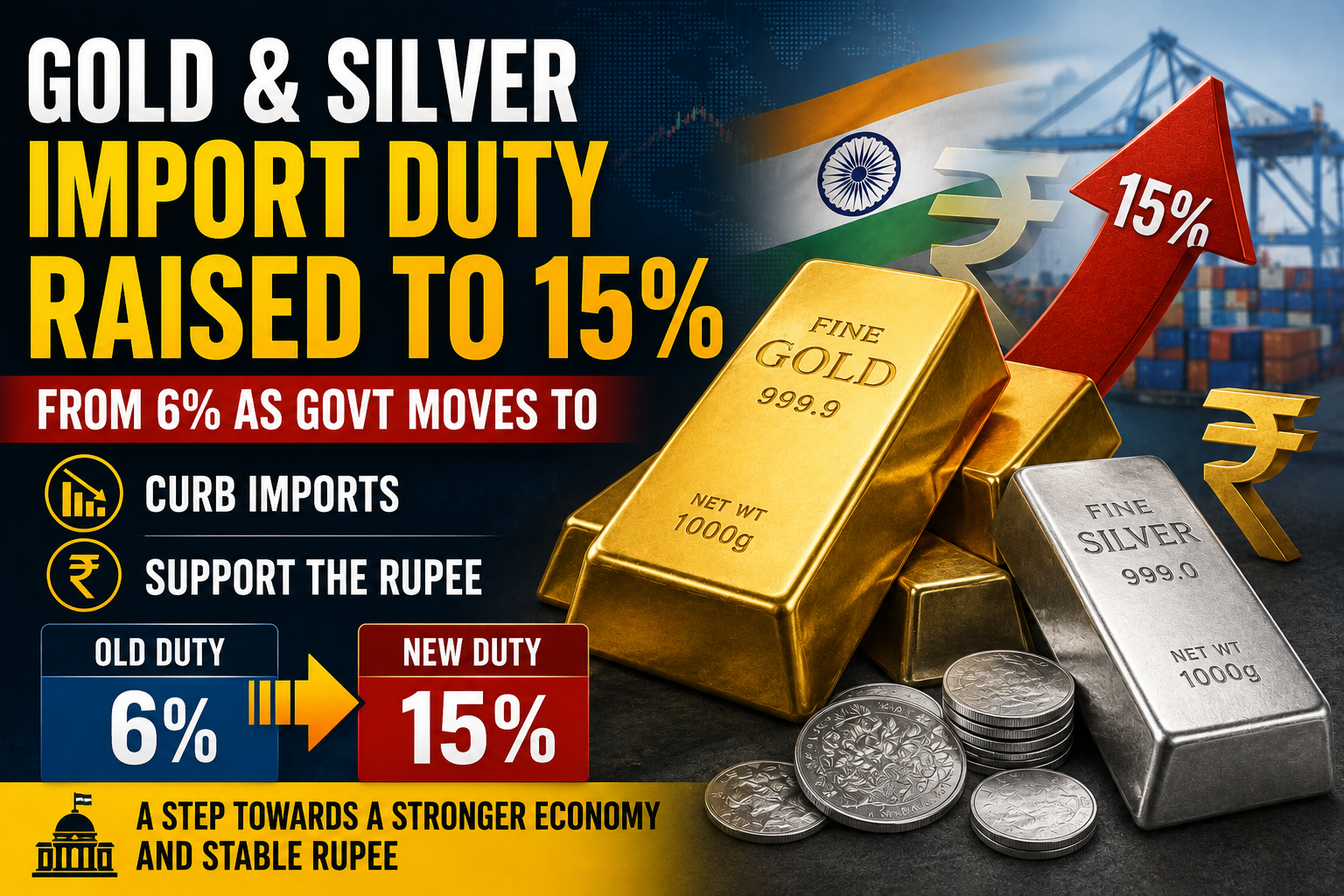
The Indian government has sharply increased import duties on gold and silver from 6% to 15% in a significant policy move aimed at reducing precious metal imports and stabilising the Indian rupee.
The decision comes amid rising concerns over the widening trade deficit, pressure on foreign exchange reserves, and continued volatility in global currency markets. Officials believe higher import taxes could help reduce excessive bullion imports and ease pressure on the country’s current account balance.
India remains one of the world’s largest consumers of gold, with demand driven by jewellery purchases, weddings, festivals, and investment demand. However, large-scale imports often increase dollar outflows, putting additional strain on the rupee during periods of global uncertainty.
Following the announcement, domestic gold and silver prices witnessed immediate market reaction, with bullion traders expecting retail prices to rise further in the coming weeks. Analysts say the higher duty may temporarily reduce demand, especially in price-sensitive segments of the jewellery market.
Industry experts also believe the move could impact jewellery manufacturers, bullion dealers, and importers as businesses adjust to higher acquisition costs. At the same time, organised retailers may witness changes in consumer buying behaviour ahead of the festive and wedding seasons.
Economists say the government’s latest measure is primarily focused on strengthening the rupee and controlling non-essential imports during a period of elevated global commodity prices and financial market volatility.
The policy shift also arrives at a time when international gold prices remain relatively strong due to global inflation concerns, central bank buying activity, and safe-haven demand from investors.
Market participants are now closely monitoring whether the duty hike will significantly reduce import volumes or lead to higher unofficial gold inflows through smuggling channels, which has historically increased during periods of steep import taxation.
Meanwhile, financial analysts expect continued volatility in the bullion market as investors assess the long-term impact of the government’s decision on domestic prices, jewellery demand, and overall economic activity.