
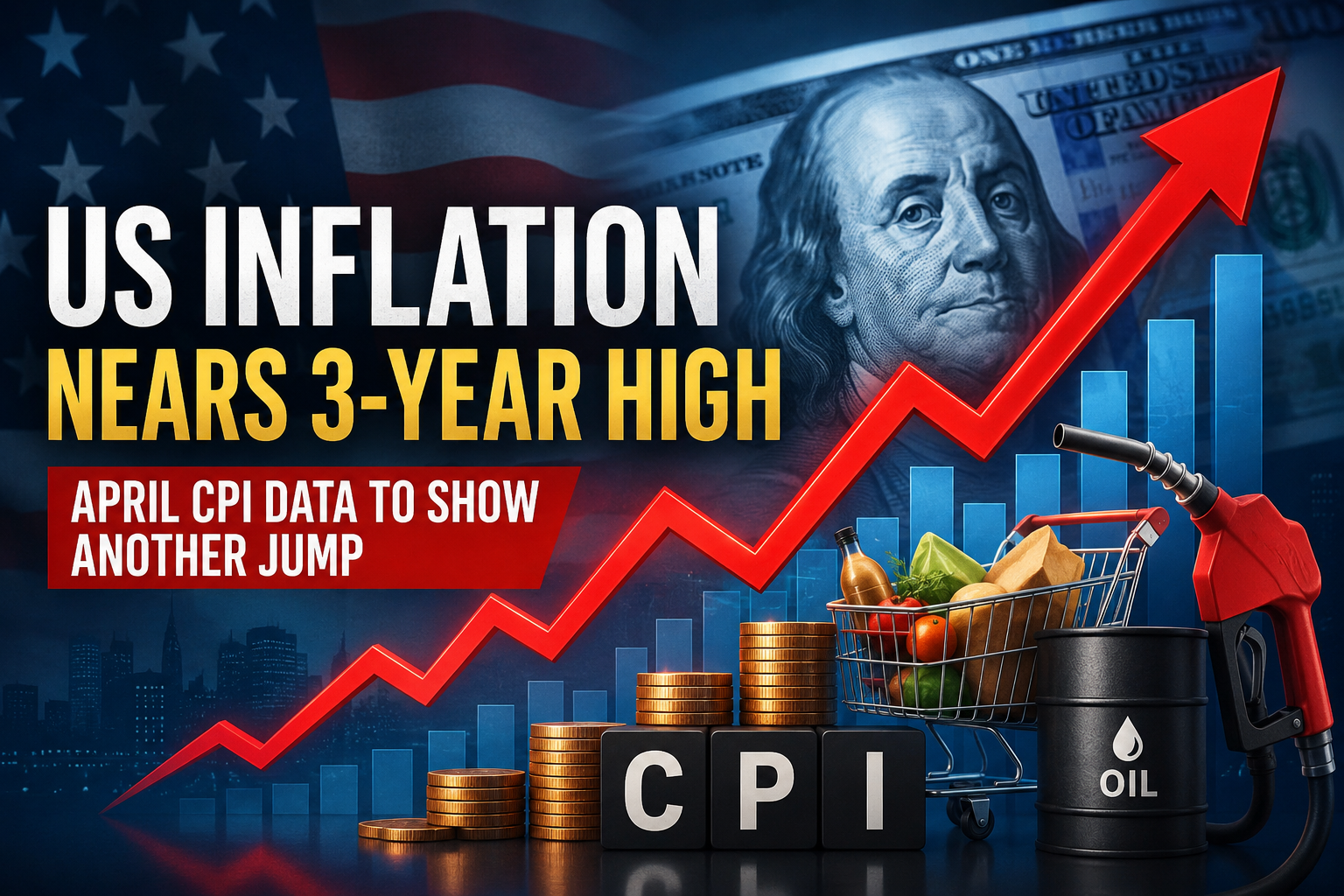
The United States is preparing for another major inflation update as the April 2026 Consumer Price Index (CPI) report is expected to show the fastest annual inflation growth in nearly three years.
According to market forecasts, annual US inflation could rise to around 3.7% in April, compared to 3.3% recorded in March. Monthly inflation is also projected to increase by 0.6%, highlighting continued pressure on consumer prices across multiple sectors.
Economists say rising energy costs remain one of the biggest reasons behind the latest inflation surge. Oil prices have climbed sharply in recent months amid geopolitical tensions in the Middle East, especially the ongoing conflict involving the United States and Iran. Crude oil prices reportedly increased more than 50% during the peak of the conflict period before slightly easing in early May.
Core CPI inflation, which excludes volatile food and energy prices, is also expected to edge higher to around 2.7%. This metric is closely monitored by the US Federal Reserve because it provides a clearer picture of long-term inflation trends in the economy.
Financial markets are closely watching the inflation report because stronger-than-expected data could delay future interest rate cuts from the Federal Reserve. Analysts believe the central bank may maintain higher interest rates for a longer period if inflation continues to remain above its target level.
The inflation outlook has also impacted global currency and stock markets. The US Dollar strengthened against several major currencies ahead of the CPI release, while investors moved cautiously in equity markets due to concerns over prolonged inflation and economic uncertainty.
Experts warn that higher fuel prices, transportation costs, and household expenses could continue affecting consumers in the coming months if global oil markets remain unstable. Several analysts also expect inflation pressure to spread into sectors such as food, travel, housing, and technology.
The official CPI report from the US Bureau of Labor Statistics is expected to play a major role in shaping upcoming Federal Reserve decisions and broader market sentiment across global financial markets.